
Beaver Mitigation & STEM Habitat Project
The Beaver Mitigation & STEM Habitat Project at Wallace Pond is a hands-on environmental learning initiative designed to introduce local students to real-world conservation methods, habitat protection, and wildlife management. In partnership with Lewis County and following guidance from the Cascade Forest Conservancy (CFC), Greater Toledo Heritage and Horizons (GTHH) is helping to protect shoreline trees, restore habitat health, and create long-term learning opportunities for youth in our community.
Project Overview
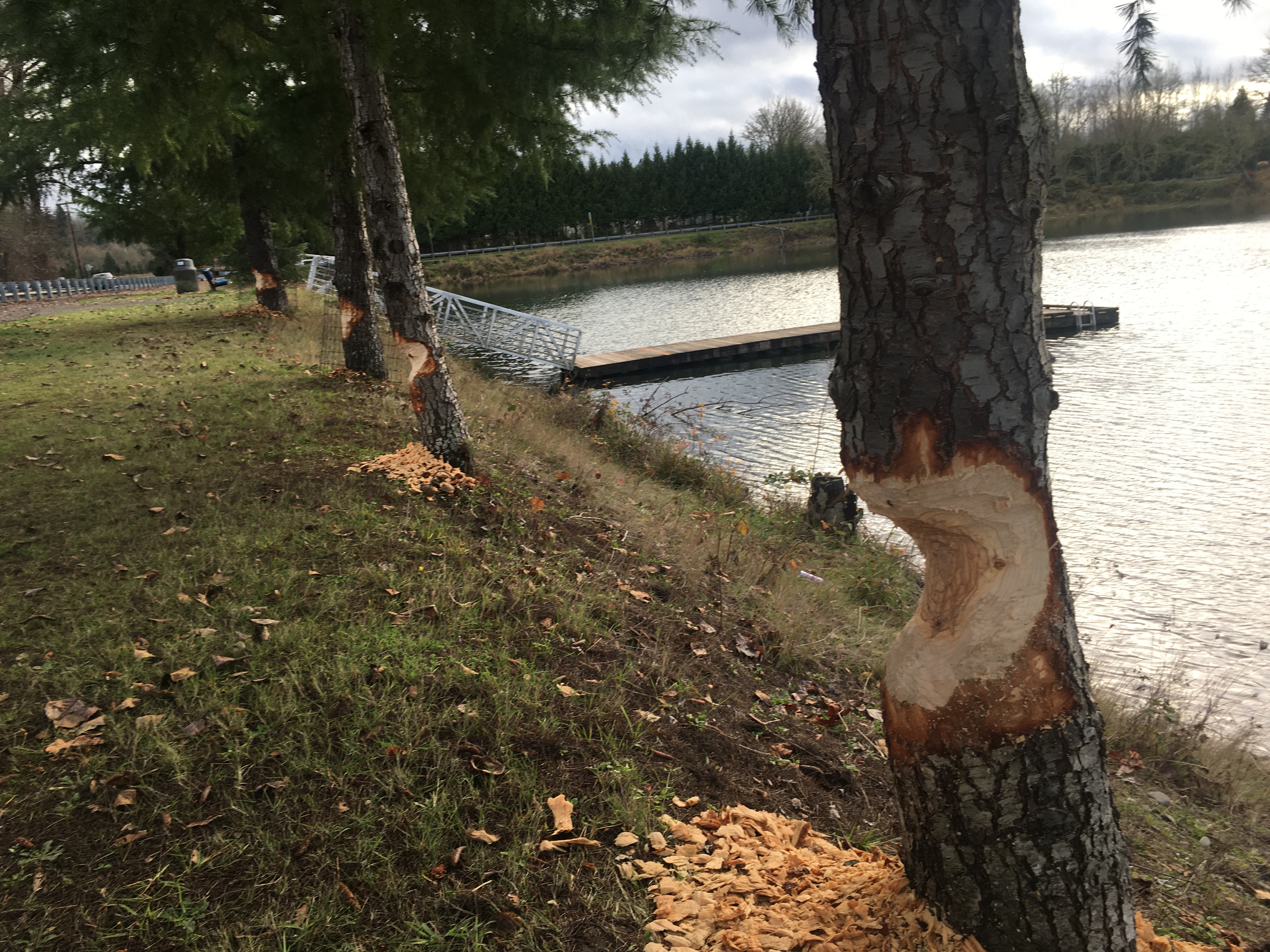
Beavers play an important ecological role in many environments, but Wallace Pond is not a suitable long-term location due to heavy public use and the importance of maintaining shoreline stability. After several weeks without activity, a beaver returned in late November and caused significant new damage to multiple trees around the pond’s edge.
Because of the urgency and the speed of the damage, GTHH initiated immediate non-lethal mitigation at the request of Lewis County. Board members installed protective wire fencing to safeguard vulnerable trees and help discourage the beaver from remaining in this high-use recreation area.
Why Work Began Before Youth Participation
The project was originally planned as a youth-led STEM activity; however, the rapid return of the beaver required immediate action to prevent additional damage and protect the safety and integrity of Wallace Pond. Once the emergency mitigation phase is complete and conditions stabilize, students will have the opportunity to participate in the next stages of monitoring and restoration.
Mitigation Methods Used at Wallace Pond
To protect shoreline trees from further damage and discourage the beaver from remaining at Wallace Pond, GTHH implemented two proven, non-lethal mitigation techniques recommended by the Cascade Forest Conservancy and regional wildlife experts. These methods help preserve park vegetation while encouraging the beaver to relocate naturally to a more suitable habitat.
1. Protective Fencing Around Tree Bases
GTHH installed galvanized steel wire fencing around the trunks of vulnerable trees. This fencing:
- Prevents the beaver from accessing the tree bark
- Reduces the food sources attracting the beaver to the pond
- Allows the tree to continue growing without damage
- Is non-lethal and does not harm wildlife
The fencing is spaced to avoid constricting tree growth and is secured to withstand weather and water-level changes.
2. Protective Coatings Using Grit-Filled Paint
In areas where fencing is not suitable, GTHH applied a mixture of exterior latex paint blended with fine sand (“grit-filled paint”) to the lower portions of certain trees. This technique:
- Makes the bark unappealing for beavers to chew
- Creates a durable, non-toxic barrier
- Is widely used as an effective humane deterrent
Why These Methods Were Chosen
Both fencing and grit-filled paint protect vegetation without harming wildlife. By limiting easy food sources, these strategies help encourage natural relocation and reduce the likelihood of continued damage or the need for more invasive management approaches.
Tree Flagging for Evaluation
As part of our stewardship work at Wallace Pond, GTHH has placed temporary flagging on several trees that appear to be dead, dying, or structurally compromised due to past beaver activity. This flagging does not mean the trees will automatically be removed—it simply identifies them for evaluation by Lewis County staff.
GTHH does not remove trees independently. All assessments and actions are performed in collaboration with Lewis County to ensure safety, habitat health, and compliance with park management standards. The evaluation helps determine whether:
- a tree poses a safety risk to visitors,
- a tree’s condition could contribute to shoreline erosion,
- or a tree should remain in place as part of the natural habitat.
If tree removal is approved, GTHH will work with Lewis County on potential replacement plantings to support long-term shoreline stability and habitat restoration. Flagging is a routine part of environmental management, and visitors may see these markers as evaluations move forward.
STEM Learning Opportunities
Local youth will have the opportunity to participate in structured, hands-on STEM activities including:
- Monitoring beaver activity and documenting habitat impacts
- Learning non-lethal wildlife management and coexistence strategies
- Supporting riparian restoration and planting replacement vegetation
- Assisting with long-term shoreline stability assessments
- Exploring ecological relationships, food sources, and watershed health
Youth participation will begin once a group is confirmed and the emergency mitigation phase is complete. The project is designed to introduce students to environmental science, wildlife biology, and community stewardship while providing meaningful, real-world STEM learning.
Community Partners & Support
This project is made possible through collaborative work with:
- Lewis County Facilities – project coordination, review, and approvals
- Cascade Forest Conservancy – non-lethal beaver management guidance
- The Home Depot – Chehalis – donation of fencing, posts, and protective paint
Get Involved
GTHH welcomes community participation in stewardship, education, and conservation activities.
Updates on this project will be shared on this page and through our main website at www.gthh.org.